Rachana Bajaj
For Rachana Bajaj, the journey of creation holds far greater beauty and meaning than the
destination itself. Her artistic practice is not centred solely on the final outcome but
on
an evolving process that captures her experiences, emotions, and responses to the
world around her. She draws deep inspiration from nature’s diverse forms—plateaus,
hills, mountains, valleys, rivers, oceans, and rocks—as well as from the ways in which
people adapt to their environments. This continual evolution of life, in both nature and
human behaviour, strongly influences her work.
Rachana works primarily with mixed media, using acrylic as a foundational medium,
while also incorporating paper, textiles, and found objects. Each material she chooses
becomes a reflection of thoughts and emotions that have lingered within her, waiting for
the right moment to be expressed. Her creative process is highly intuitive. It often
begins
with a long-held idea that gradually evolves as she explores the medium best suited to
convey its essence.
As her work develops, she remains receptive to unexpected directions, allowing the
process itself to shape the final form. This journey mirrors an ongoing internal
dialogue,
deeply influenced by her social surroundings and by the resilience of people who
continue to move forward despite life’s challenges. Through her practice, she strives to
create art that reflects humanity’s dialogue with the world, capturing the complexity
and
subtlety of our responses. Each artwork stands as a testament to the transformative
power of the creative process, embodying the thoughts, concerns, and lived experiences
that shape human life.
Her work was displayed in various solo as well as group exhibitions. Her work is in
collection in India as well as abroad.
Concept
At the most literal level, your body is never static. Cells are constantly forming,
breaking
down, and being replaced. Skin sheds, blood renews, muscles tear and rebuild stronger.
What feels like a stable “self” is actually a continuous process of making, unmaking,
and
remaking. In that sense, the body is not an object—it’s a cycle.
Emotionally, the same pattern appears. You form attachments, identities, and feelings.
Then something shifts—loss, change, growth—and those forms break down. What
follows is not emptiness, but a reconfiguration: new meanings, new ways of feeling, a
different version of yourself emerging from what was undone.
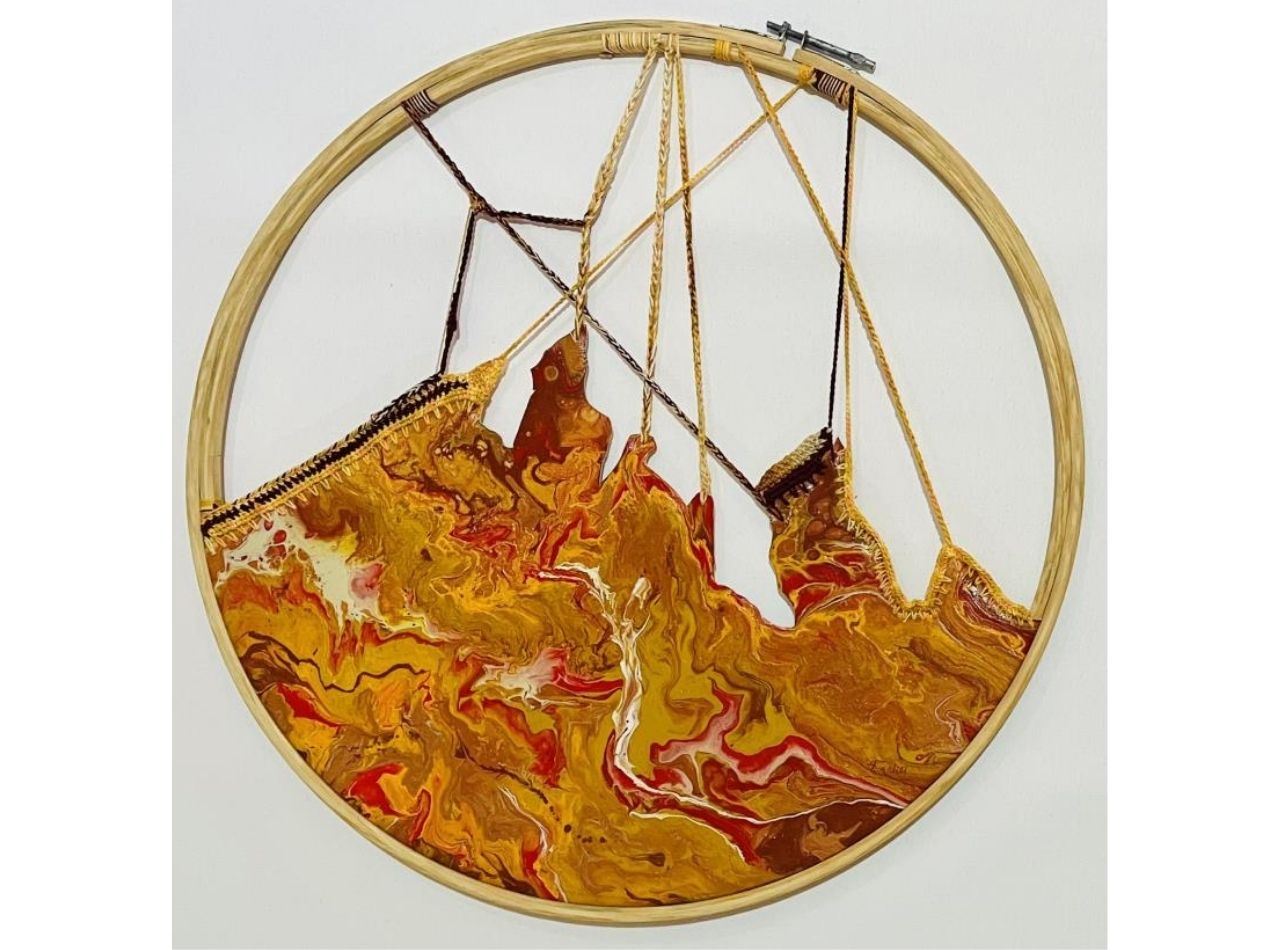
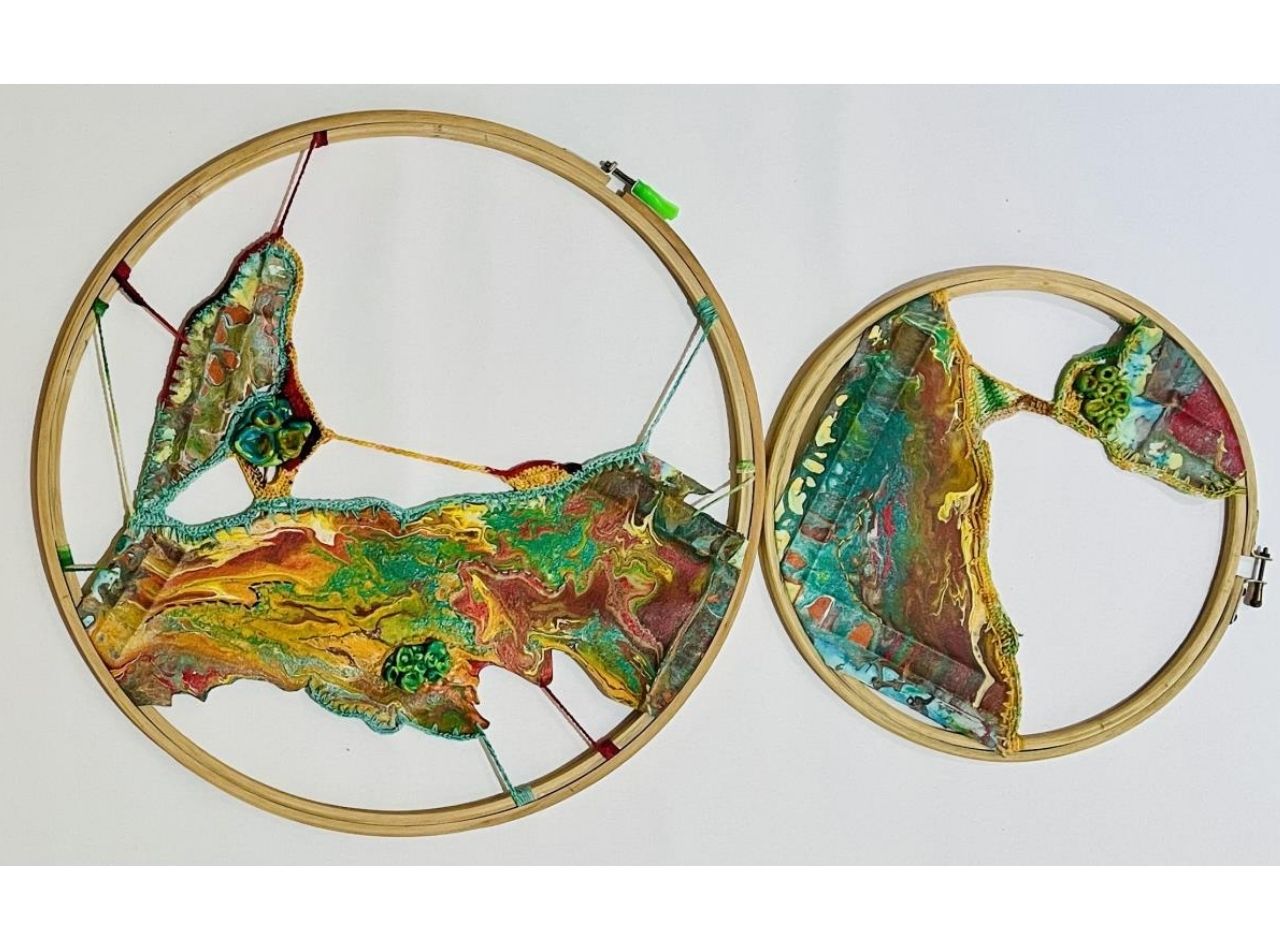
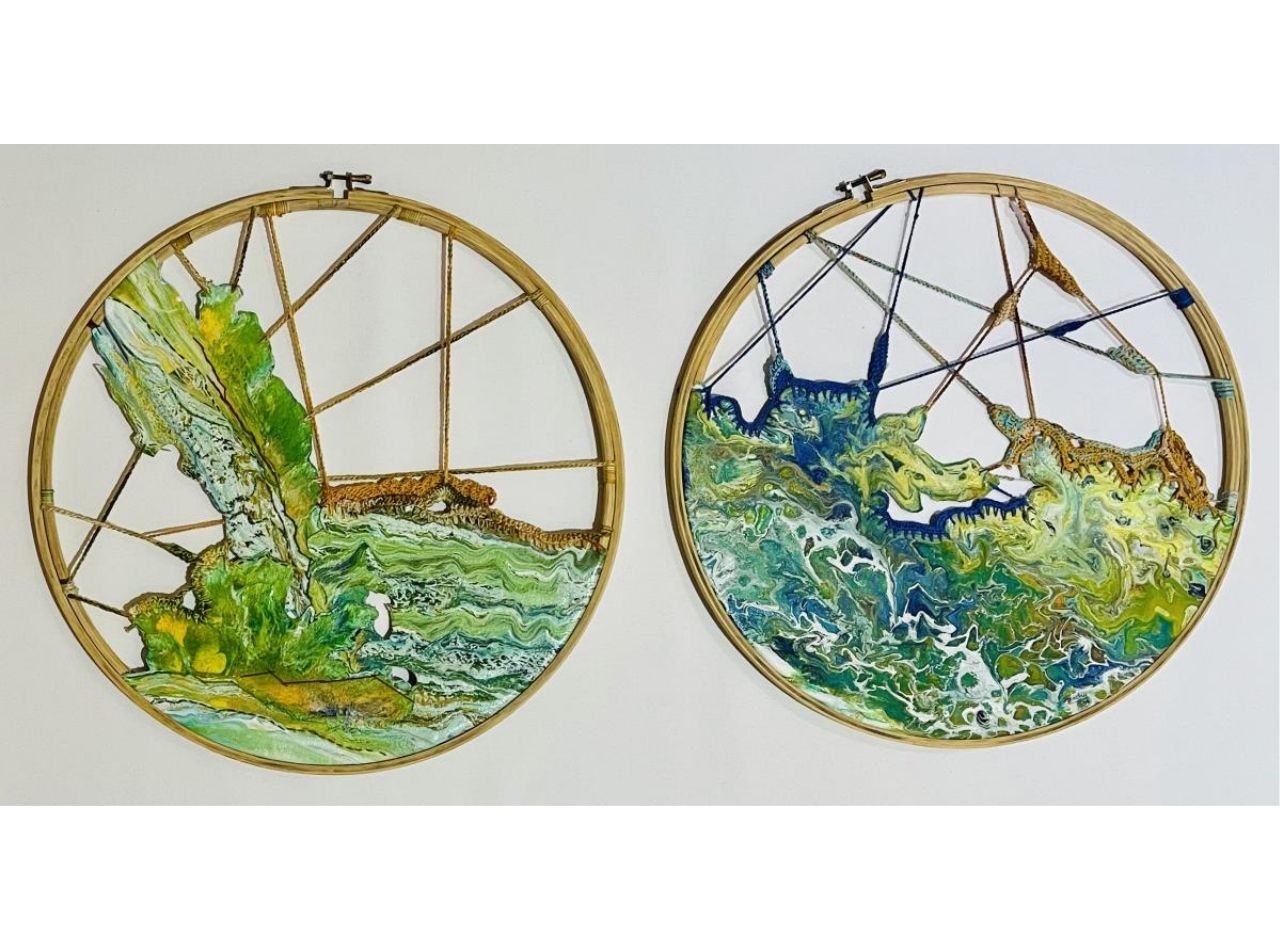
The processes of creation for these artworks is based on – Create, destroy and create is
the way of nature’. During the process I destroy my own painting for creating new
compositions using crochet technique.
Through my work, The body can resonate as object and subject with my painting
materials and process used for creating new form.